
Meta Slashes VR Spending By 30 % In Strategic Pivot

Meta is preparing to cut its metaverse budget by up to 30 %, a sign of a major strategic shift. Three years after making virtual reality its top priority, the company is now redirecting its investments towards artificial intelligence and augmented reality. A significant change of course for Mark Zuckerberg, who questions the future of the metaverse and immediately boosted Meta’s stock in the market.

In Brief
- Meta is considering a 30 % cut to the metaverse budget.
- The budget cut would mainly affect the Reality Labs virtual reality (VR) unit.
- This decision is part of a strategic shift towards artificial intelligence (AI) and augmented reality (AR).
- Mark Zuckerberg confirmed the opening of a new creative studio dedicated to smart glasses design.
A strategic pullback on the metaverse
Meta plans to reduce the budget of its Reality Labs division, which oversees its virtual reality projects, by up to 30%, while the company had already injected 15 billion to catch up in the AI field.
This budget cut could take effect as early as January 2026 , according to information reported by Bloomberg, within the framework of the company’s multi-year strategic planning.
It would mainly target the unit dedicated to virtual reality, the most resource-consuming within Reality Labs. Although no final decision has been made yet, layoffs are also mentioned in internal discussions. The announcement triggered an immediate market reaction. At Thursday’s opening session, META stock gained more than 5 % , before closing the day up 3.4 %, at around 661 dollars.
Several factors shed light on Meta’s strategy behind this shift :
- Wide-scale adoption of VR products has been lacking, limiting profitability prospects ;
- Initial enthusiasm for the metaverse has waned in tech and financial circles ;
- Diminishing ambitions of other industry giants (notably Google with Daydream and Apple with its XR projects) reduce competitive pressure ;
- Meta’s stock performance has improved (+5 % at opening) in response to its spending rationalization, showing market support for this repositioning.
This strategic decision takes place amid a general slowdown surrounding the metaverse. Such dynamics likely prompted Meta executives, using on-chain data collected, to ease up on a market where competition is no longer as aggressive, thereby reducing the pressure to innovate at all costs in the VR segment.
Meta bets on artificial intelligence and augmented reality
In this phase of strategic adjustment, Meta is not just freezing projects. The company is actively reallocating its resources towards technologies considered more mature or promising, particularly augmented reality glasses and artificial intelligence tools.
Some of the funds recovered from VR will be directed to another Reality Labs division responsible for developing AR glasses. Mark Zuckerberg confirmed this direction in a Threads post, stating : “we are entering a new era where AI-powered glasses and other devices will change how we connect to technology and each other”. He also announced the opening of a new creative studio within Reality Labs, focused on design, fashion, and technology.
Unlike the metaverse, which still has marginal public adoption, smart glasses and AI interfaces are seen as usage vectors more integrated into daily life. For Meta, the real challenge is now to offer natural, people-centered experiences, in Zuckerberg’s words.
By internalizing the design and development of these products, Meta aims to strengthen creative control and provide greater coherence to its hardware and software ecosystem. It is no longer about selling a futuristic dream, but anchoring concrete uses in the current technological context.
This strategic refocus illustrates the adjustments of a giant facing market realities. While AI gains priority, the metaverse and Web3 remain in limbo. Their future will now depend on their ability to convince beyond initial promises.
Disclaimer: The content of this article solely reflects the author's opinion and does not represent the platform in any capacity. This article is not intended to serve as a reference for making investment decisions.
You may also like
Mars Morning News | After the Ethereum Fusaka upgrade, the blob base fee surged by 15 million times
Multiple blockchain industry updates: a Bitcoin OG wallet transferred 2,000 BTC; Cloudflare outage was not caused by a cyberattack; the DAT bubble has burst; Ethereum Fusaka upgrade fees have surged; LUNC has risen over 80% intraday. Summary generated by Mars AI. This summary was generated by the Mars AI model, and the accuracy and completeness of its content are still under iterative improvement.

Drones, Fake Birdsong, and Broken Glass Traps: Malaysia is Undergoing an Unprecedented "Bitcoin Crackdown"
The Malaysian government is intensifying its crackdown on illegal bitcoin mining, utilizing technologies such as drones and sensors to uncover numerous operations, with electricity theft causing significant losses. Summary generated by Mars AI. The accuracy and completeness of the content generated by the Mars AI model are still in the process of iterative improvement.

Bitwise CIO: Stop Worrying, MicroStrategy Won't Sell Bitcoin
There are indeed many concerns in the crypto industry, but MicroStrategy selling bitcoin is definitely not one of them.

A 6200-fold profit: Who is the biggest winner of Moore Threads?
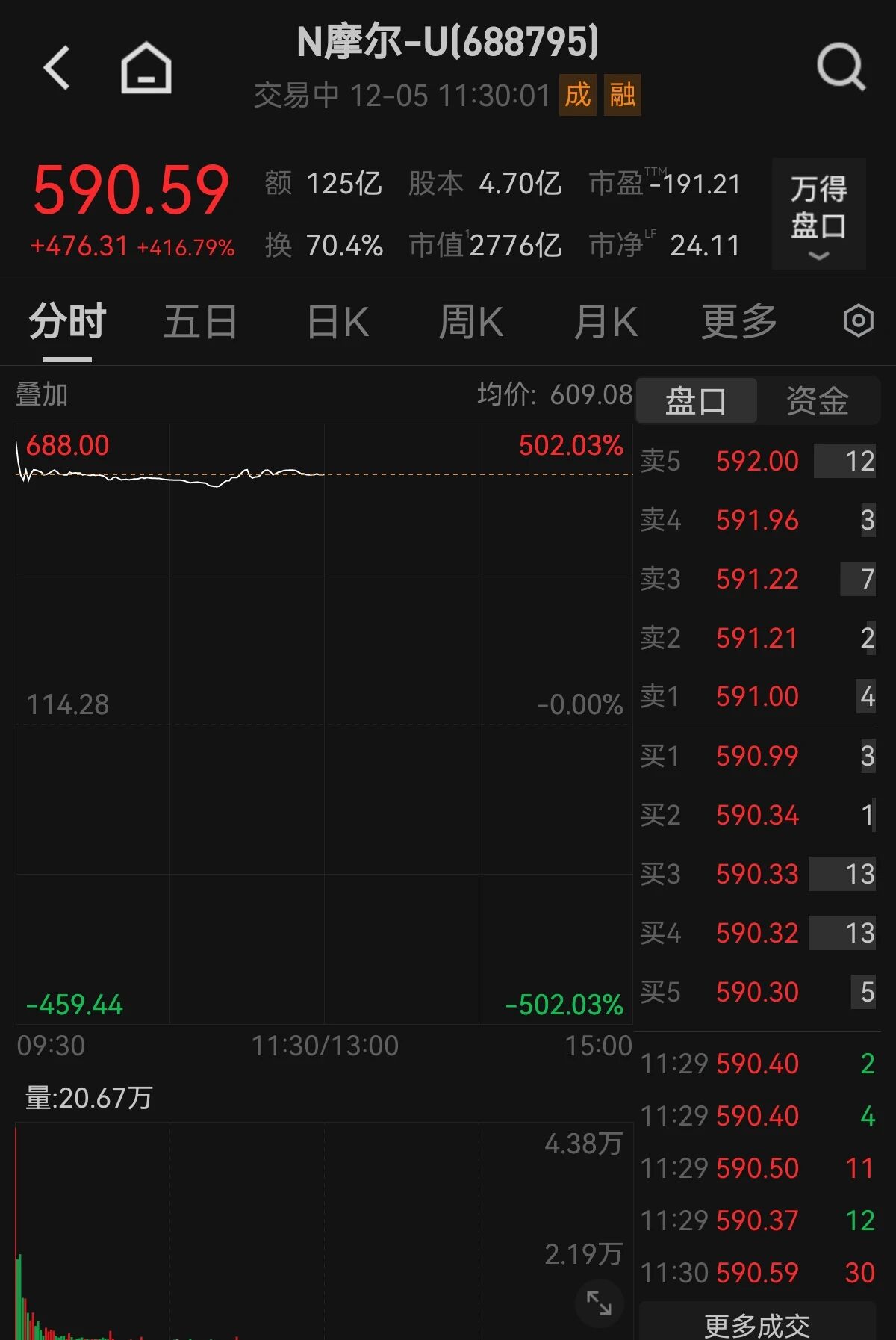
On December 5, Moore Threads officially debuted on the STAR Market, opening at 650 yuan, a surge of 468.78% compared to its issue price of 114.28 yuan.
Trending news
MoreCrypto prices
More





