
Renewable Energy Learning: An Unseen Driver of Expansion in 2025
- 2025 wind energy education programs are critical for addressing a 100,000-technician labor gap and advancing green infrastructure. - Institutions like STL USA and NREL integrate AI analytics, blade recycling, and hands-on turbine training to meet industry demands. - Industry partnerships with OEMs and $36M+ in federal funding accelerate workforce development but face policy risks from DOI land-use restrictions. - Global clean energy investment reached $2.1T in 2024, with U.S. renewables accounting for 93
The Transformative Power of Renewable Energy Education
The renewable energy landscape is experiencing a profound transformation, propelled by advances in technology, supportive policies, and an increasing worldwide appetite for sustainable power sources. While much attention is given to the hardware—such as wind turbines—the real driving force behind this shift is the specialized education shaping future wind turbine technicians and environmental experts. By 2025, targeted training in wind energy and environmental sciences has become a cornerstone for sustainable investment in green infrastructure, ensuring that workforce development keeps pace with the urgent need to reduce carbon emissions.
Bridging the Skills Gap: Evolving Academic Programs
Enrollment patterns in wind energy and environmental science courses highlight a sector in transition. Educational institutions like STL USA are rolling out advanced curricula tailored to industry requirements, covering topics such as high-voltage operations and substation management. This reflects the increasing sophistication of today’s wind energy systems.
At the same time, organizations like the National Renewable Energy Laboratory (NREL) are prioritizing experiential, cross-disciplinary learning through initiatives like the Collegiate Wind Competition, which cultivates practical expertise in turbine engineering and energy integration. These educational efforts are direct responses to a projected need for 100,000 additional wind technicians by 2030, ensuring that graduates are ready to meet the demands of a rapidly growing field.
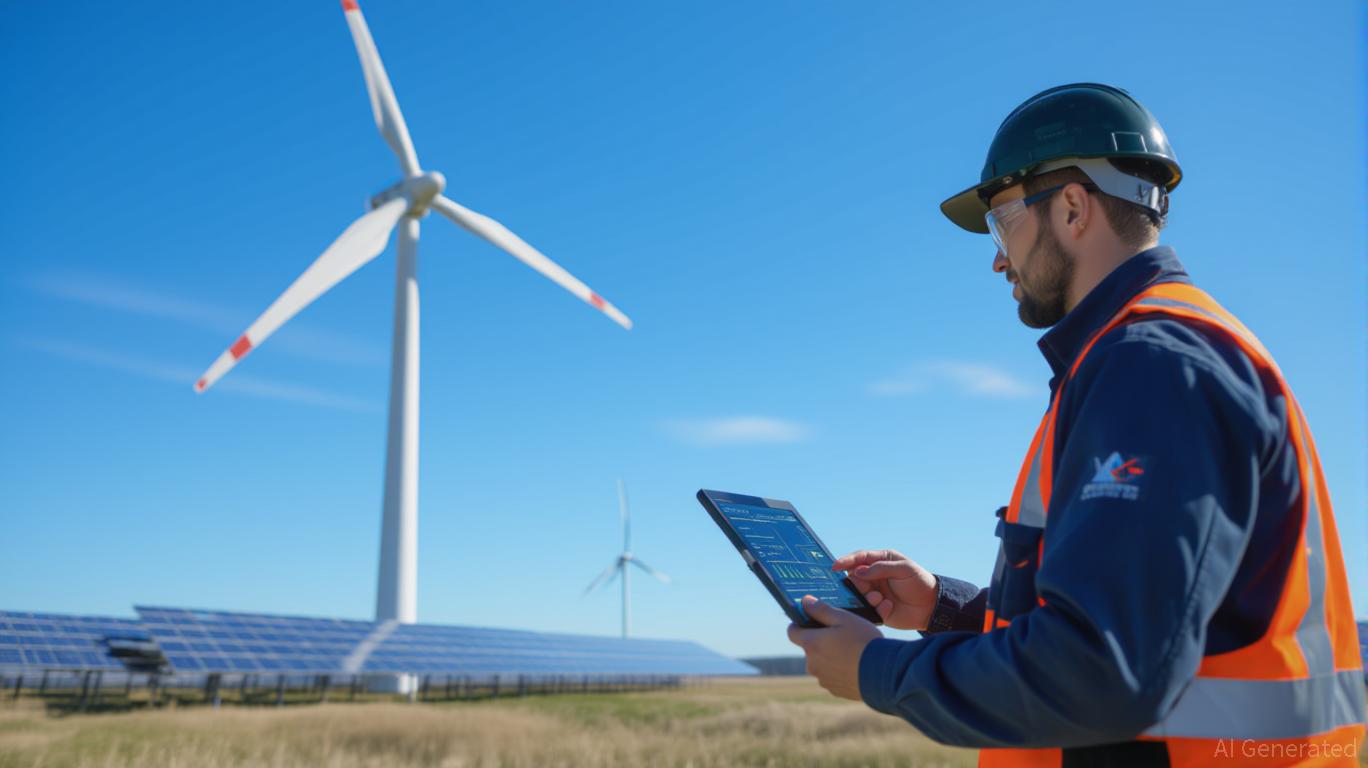
To keep up with the digital transformation of the energy sector, academic programs are incorporating subjects such as artificial intelligence, real-time data analytics, and predictive maintenance. There is also a growing emphasis on environmental stewardship, with training in blade recycling and end-of-life management to address the industry’s mounting waste challenges. These changes are equipping students with the versatility to tackle both technical and environmental issues.
Collaboration Between Academia, Industry, and Policy
The partnership between educational institutions and the energy industry is becoming increasingly robust. NREL and STL USA, for example, are working closely with equipment manufacturers to ensure that training reflects the realities of the workplace. Such collaborations are vital for expanding the talent pool, especially as the U.S. Department of Energy (DOE) has identified a shortage of skilled workers as a major obstacle to offshore wind expansion.
Federal investment is also playing a significant role: in 2025, the DOE’s Wind Energy Technologies Office (WETO) allocated $20 million to enhance wind turbine recycling and $16.9 million to support offshore wind research and development. These funds not only drive technological progress but also help create a steady stream of qualified professionals.
However, changes in policy can introduce uncertainty. A recent memorandum from the U.S. Department of the Interior has tightened regulations on wind and solar projects on federal lands, which could slow project timelines and complicate access to incentives. This highlights the importance of stable, long-term policy support for the sector’s continued growth.
Economic Outlook and Market Trends
Investing in renewable energy education makes strong financial sense. Global investment in clean energy reached $2.1 trillion in 2024 and is expected to climb to $3.3 trillion by 2025, with solar power leading the way among electricity generation technologies. In the United States, renewables are projected to account for 93% of new power plant construction in 2025, thanks to their cost-effectiveness and speed of deployment.
Corporate strategies are aligning with these trends: 92% of chief financial officers intend to boost sustainability spending in 2025, and 84% of companies with climate objectives are accelerating their initiatives. The Office of Energy Efficiency and Renewable Energy (EERE) has made workforce development a top priority in its 2025 budget, aiming to lower clean energy costs and achieve net-zero emissions by 2050.
Nevertheless, the sector remains sensitive to policy shifts. By the end of 2025, BloombergNEF reported a 36% drop in wind and solar investments due to regulatory uncertainty, underscoring the sector’s reliance on consistent government support.
Education: The Unsung Driver of Renewable Growth
Training in renewable energy is not just a response to industry needs—it is a catalyst for progress. Programs that blend technical instruction with sustainability principles are producing graduates who can enhance energy systems, manage decommissioning, and utilize artificial intelligence for predictive maintenance. These skills are crucial for realizing the full potential of green infrastructure.
For investors, the message is clear: educational programs in wind energy and environmental science are central to the clean energy transition. As the industry faces regulatory and technological challenges, ongoing investment in education will be pivotal in determining whether the United States retains its leadership in a global market valued at $3.3 trillion.
Disclaimer: The content of this article solely reflects the author's opinion and does not represent the platform in any capacity. This article is not intended to serve as a reference for making investment decisions.
You may also like
ICP Network's Rapid Expansion and Increasing Institutional Embrace: Key Strategic Considerations for Long-Term Investors in Web3 Infrastructure
- ICP's 2025 growth stems from Fission/Chain Fusion upgrades enabling Bitcoin-Ethereum interoperability and Caffeine AI's no-code dApp platform attracting 2,000+ developers. - Institutional adoption surged with $1.14B TVL, Microsoft-Google partnerships, and first ICP ETP via Copper-DFINITY collaboration expanding institutional access. - Despite $4.71 price peak in November 2025, 10%+ volatility highlights risks, though 11,500 TPS capacity and $357M daily trading volume signal infrastructure strength. - Lon

New Prospects in STEM Learning and Career Advancement: Sustained Institutional Commitment to Academic Initiatives Fueling Tomorrow’s Innovation
- Global STEM education is accelerating as AI and engineering drive economic transformation, with 2025 government initiatives expanding AI-focused programs and workforce development. - U.S. universities report 114.4% growth in AI bachelor's enrollments, supported by corporate partnerships and $25M+ in tech industry investments for AI labs and teacher training. - EdTech's AI-powered platforms, valued at $5.3B in 2025, are projected to reach $98.1B by 2034, with startups like MagicSchool AI securing $45M in
ICP Caffeine AI: Leading the Way in AI-Powered Investment Prospects within the Web3 Landscape
- ICP Caffeine AI, developed by DFINITY Foundation, merges AI and blockchain to enable no-code app development via natural language prompts. - Its "chain-of-chains" architecture and Chain Fusion technology enhance scalability and cross-chain interoperability for AI-native applications. - With $237B TVL and partnerships with Microsoft/Google Cloud, ICP faces competition from TAO and RNDR but aims to rival AWS with on-chain AI solutions. - Institutional adoption in finance and energy, plus regulatory alignme

Internet Computer's Rapid Rise: Could This Signal a Significant Change in the Crypto Landscape?
- Internet Computer's ICP 2.0 upgrade and partnerships with Microsoft , Google, and SWIFT drove a 30% price surge in late 2025. - Caffeine AI and Chain Fusion innovations reduced AI costs and enabled cross-chain interoperability, enhancing decentralization. - Institutional adoption via hybrid infrastructure and reverse-gas model boosted ICP's credibility and deflationary appeal. - November 2025 price spike showed 35% address growth but 91% fewer token transfers, indicating speculative activity. - Analysts

Trending news
MoreCrypto prices
More





