
Sustainable Urban Mobility: Unlocking Investment Opportunities in Electric and Shared Transportation in Developing Markets
- Global urban mobility shifts accelerate in emerging markets through electric and shared transport investments. - Solar-powered taxis (e.g., South Africa's eKamva, Ghana's Solar Taxi) and policy-driven EV adoption (India, Argentina) reduce emissions and costs. - World Bank/ADB fund EV infrastructure, projecting $456B smart transport market growth by 2034 amid climate goals. - Challenges include grid reliability (Ghana's "Dumsor" outages) and regulatory adaptation for shared mobility scalability.
Accelerating the Transition to Sustainable Urban Mobility
Urban centers around the world are rapidly embracing sustainable transportation, propelled by climate concerns, technological advancements, and the pressing need to combat congestion and pollution in fast-growing cities. Emerging economies are at the forefront of this transformation, attracting significant investment in electric and shared mobility solutions that align with environmental objectives. From solar-powered minibuses in Africa to government-backed car-sharing programs in Asia, the intersection of innovation, infrastructure, and policy is reshaping how people move—and opening new investment opportunities.
Electric Vehicle Infrastructure: Driving Decarbonization
Developing robust electric vehicle (EV) infrastructure is central to advancing sustainable transport in emerging markets. In South Africa, the introduction of the eKamva electric minibus taxi—a 15-passenger vehicle with a 200-kilometer range—marks a significant milestone in reducing emissions from informal transit. Spearheaded by GoMetro, this initiative integrates charging stations and a digital platform for fleet management, cutting operational expenses by 40–70% compared to traditional diesel models. Ghana’s Solar Taxi project, which assembles EVs and utilizes solar-powered hubs, has grown into one of the continent’s leading EV manufacturers, showcasing the potential of solar-fueled mobility in sun-rich regions.
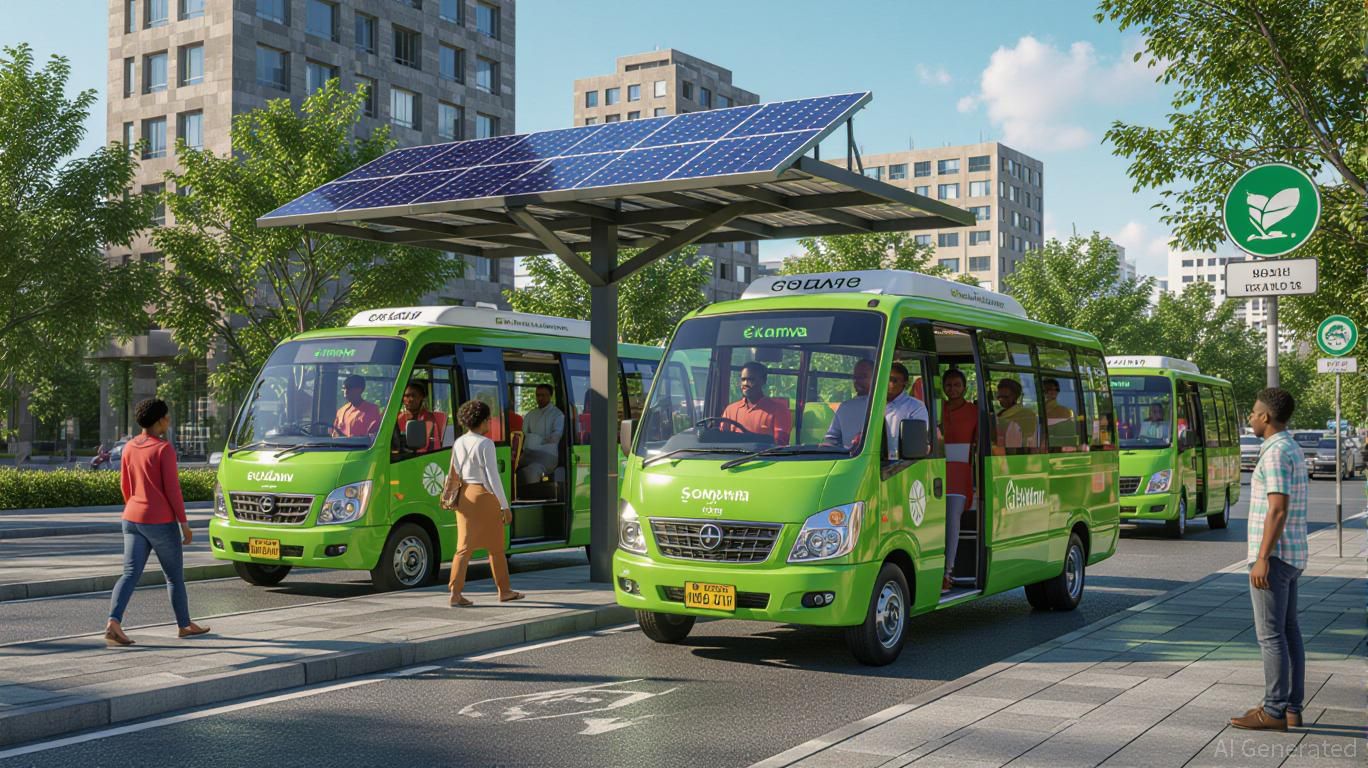
These advancements are bolstered by global funding trends. Major institutions like the World Bank Group and the Asian Development Bank are channeling substantial resources into EV infrastructure, recognizing its importance for reducing emissions and strengthening energy independence. By 2034, the smart transportation sector in emerging markets is expected to surge from USD 136.05 billion in 2024 to USD 456.92 billion, fueled by the push for electrification and modernized energy grids.
Shared Mobility and Car-Sharing: Transforming Urban Transportation
Shared mobility options—including car-sharing and micro-mobility—are gaining momentum as affordable, eco-friendly alternatives to private car ownership. In India, supportive government policies have accelerated EV adoption, resulting in higher consumer satisfaction than in Indonesia or Nigeria. This progress is attributed to incentives, tax breaks, and a comprehensive plan for expanding charging infrastructure, with a target of 30,000 public EV charging stations by 2030. Conversely, Indonesia’s goal of reaching 2 million electric cars by 2030 is challenged by low EV adoption rates and insufficient infrastructure.
Mobility hubs are also encouraging car-sharing uptake, as seen in southern Germany, where improved access to shared vehicles has led more residents to give up personal cars. In emerging economies, integrating car-sharing with EVs and public transit is crucial. For example, Argentina’s removal of import tariffs on affordable electric and hybrid taxis has made these vehicles more accessible, while collaborations with companies like BYD and Shenzhen DiDi are expanding electric fleets.
Policy Innovation and Systemic Change
Effective policy frameworks are essential for enabling sustainable mobility. Emerging markets are increasingly relying on public-private partnerships to speed up infrastructure development. India’s battery-as-a-service approach, for instance, lowers upfront costs for informal sector workers, addressing concerns about range and affordability. In sub-Saharan Africa, pilot projects using solar photovoltaic systems and stationary storage are helping to reduce grid strain, with one Johannesburg initiative cutting grid demand by 66% per taxi.
Regulatory measures such as carbon pricing and clean-air zones are also influencing energy consumption patterns. As of 2024, 75 carbon pricing programs worldwide affect 24% of global emissions, encouraging industries to shift to cleaner alternatives. Cities like London and Beijing have established low-emission zones, gradually phasing out conventional taxis and providing clearer regulatory guidance for operators.
Investment Prospects and Market Outlook
The shared mobility sector is forecasted to expand at a compound annual growth rate of 12.5%, reaching USD 768.2 billion by 2033, driven by urbanization and digital integration. Investments in solar-powered minibuses and car-sharing initiatives are particularly promising. Projects like South Africa’s eKamva and Ghana’s Solar Taxi demonstrate the scalability of solar-based transport, while Argentina’s policy-driven EV expansion highlights the importance of regulatory support in market development.
Development Finance Institutions (DFIs) play a crucial role in financing these transitions. The World Bank’s Climate Action Plan and the Asian Development Bank’s focus on sustainable infrastructure are directing capital toward projects that support net-zero ambitions. Additionally, declining costs for solar technology and EVs are making clean mobility solutions more viable, even in areas with less reliable electricity grids.
Overcoming Obstacles and Looking Ahead
Despite notable progress, significant challenges remain. In countries like Ghana, frequent power outages—locally known as "Dumsor"—pose obstacles to electrification. Accurate forecasting of energy needs and the deployment of decentralized solutions such as solar mini-grids are vital to bridging these gaps. Furthermore, regulatory systems must evolve to keep pace with the rapidly changing landscape of shared mobility, ensuring fair access and efficient operations.
Conclusion
Emerging markets present a dynamic frontier for sustainable urban mobility investments. Innovations such as solar-powered minibuses, policy-driven car-sharing, and data-centric traffic management are not only cutting emissions but also building resilient infrastructure for tomorrow’s cities. As development banks and private investors increasingly align with climate objectives, the coming decade is poised to witness a wave of transformative projects that will redefine mobility across the Global South—turning today’s challenges into opportunities for sustainable growth.
Disclaimer: The content of this article solely reflects the author's opinion and does not represent the platform in any capacity. This article is not intended to serve as a reference for making investment decisions.
You may also like
The Influence of TWT’s Updated Tokenomics on the Dynamics of the Cryptocurrency Market
- TWT/TON's 2025 tokenomics shift from speculative governance to utility-driven ecosystem integration, embedding tokens in platform functions like Trust Premium. - Deflationary mechanisms (88.9B tokens burned) and cross-chain FlexGas systems create scarcity, mitigating oversupply risks while expanding transactional use cases. - Governance reforms prioritize community voting on fees and partnerships, but face challenges from regulatory uncertainty and Solana network dependencies. - Institutional adoption gr

Astar (ASTR) Price Spike: Unraveling the Reasons for Recent Market Fluctuations
- Astar (ASTR) price surged amid Tokenomics 3.0 reforms, institutional capital inflows, and strategic partnerships in November 2025. - Deflationary mechanisms like Burndrop and a $29.15M buyback program reduced circulating supply to 8.24B tokens. - Galaxy Digital's $3. 3M OTC purchase and Coinbase listing roadmap signaled institutional confidence in ASTR's long-term potential. - Partnerships with Sony , Toyota , and Japan Airlines expanded ASTR's real-world utility in logistics and digital identity sectors
The Increasing Importance of STEM Education as a Strategic Asset in a Technology-Focused World Economy
- U.S. STEM education is reshaping curricula and partnerships to meet AI, cybersecurity, and renewable energy demands, driven by $75M investments like Farmingdale State College's expanded Computer Sciences Center. - Public-private collaborations, including NSF AI Education Act and Google/IBM workforce pledges, are accelerating workforce readiness through AI research and micro-credential programs. - STEM-focused universities achieved 11.5% average endowment returns in 2025, but proposed excise taxes threate

Aster DEX: Redefining the Landscape of Decentralized Trading
- Aster DEX is reshaping DeFi by bridging retail and institutional markets through hybrid AMM-CEX architecture and strategic partnerships. - The platform achieved 1.848 million users and $3.32B weekly trading volume in 2025, with $5.7B institutional buy volume in late 2025. - RWA integrations (gold, equities) and 7% staking rewards drive institutional adoption, while gasless trading and TWAP orders enhance execution efficiency. - Aster's 400% TVL growth and 5-7% annual token burns create scarcity, supporti

Trending news
MoreCrypto prices
More





