
The Growing Popularity of Security System Technologies Amidst a Changing World
- Security systems technology is becoming a critical pillar for economic/geopolitical resilience amid rising cyber threats and global tensions. - Cybersecurity markets are projected to grow at 9.1% CAGR through 2030, driven by cloud/IoT/AI adoption and escalating ransomware risks. - Geopolitical conflicts like U.S.-China trade wars and EU tariffs are accelerating demand for hybrid threat defenses and AI-powered security solutions. - Investors should prioritize firms integrating physical/digital security, d
The Rising Importance of Security Systems Technology
In today’s unpredictable world, the security systems technology industry has become a crucial pillar supporting both economic stability and global security. As cyber threats become more advanced and international relations continue to influence trade and policy, investors are increasingly viewing this sector as both a safeguard and a promising growth area. The intersection of rapid technological progress, supportive regulations, and mounting existential risks is positioning security systems technology to reshape infrastructure, defense, and digital trust throughout the next decade.
Accelerating Growth: Market Trends and Projections
The cybersecurity market alone is forecasted to surge from $227.59 billion in 2025 to $351.92 billion by 2030, reflecting an annual growth rate of 9.1%. This expansion is fueled by widespread adoption of cloud services, the Internet of Things, and artificial intelligence—technologies that, while transformative, also introduce new vulnerabilities. The broader security technology sector, which includes both physical and digital solutions, is also thriving, with its value expected to climb from $143.55 billion in 2024 to $225.21 billion by 2030, growing at a 7.6% annual rate. Notably, the defense-focused cybersecurity segment is projected to grow even faster, with a 14.9% annual rate through 2032, reaching $46.78 billion. These numbers highlight a shift towards viewing security as an essential component of modern infrastructure, rather than a mere reaction to threats.
Cyber Threats: From Disruption to Strategic Priority
Recent developments have emphasized the critical need for robust cybersecurity measures. Research indicates that cyberattacks are now a primary motivator for technology upgrades in sectors such as oil and gas, where digital transformation is being accelerated to counteract emerging threats. Ransomware continues to pose a significant challenge, with reports showing that in 2025, 40% of major cyber insurance claims involved data breaches—a notable increase from the previous year. Additionally, 71% of chief risk officers expect substantial operational disruptions due to cyber risks in the near future.
The integration of artificial intelligence is adding complexity to the cybersecurity landscape.
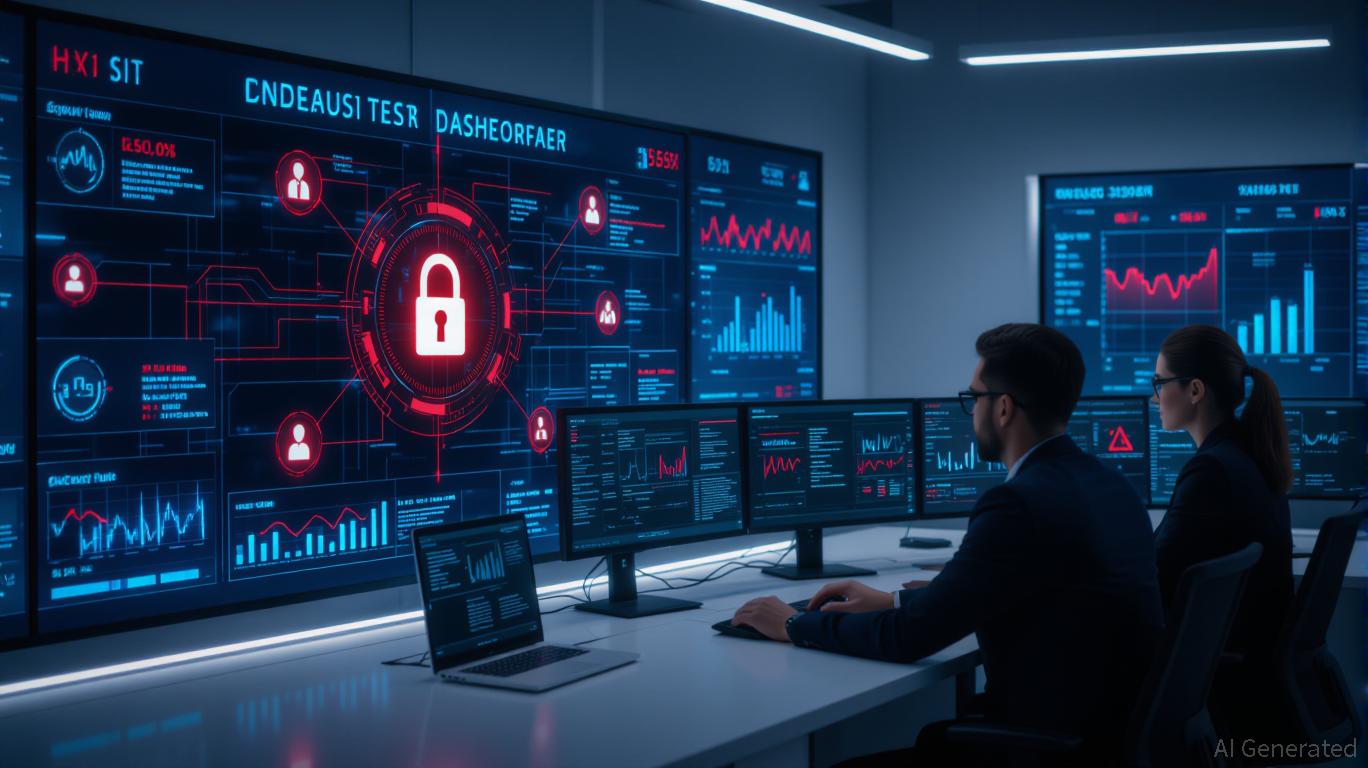
While malicious actors are using AI to create convincing social engineering attacks, defenders are leveraging machine learning for real-time threat detection and automated responses. This ongoing technological arms race underscores the importance of continuous innovation, favoring organizations with flexible research and development capabilities and scalable systems.
Geopolitical Forces: Driving Demand for Cyber Resilience
Beyond technical challenges, global political tensions are intensifying the need for advanced security solutions. For example, the ongoing trade disputes between the U.S. and China have historically coincided with increases in state-sponsored cyber espionage. Similarly, recent tariffs imposed by the U.S. on major trading partners have led to a rise in hybrid threats, including cyberattacks targeting critical infrastructure and public services, especially within the European Union. These geopolitical dynamics are directly shaping policy decisions and investment flows.
Generative AI is playing a dual role in this environment. While it strengthens encryption and enhances threat modeling, it also enables the rapid creation of deepfake disinformation and sophisticated malware. This duality makes it essential for investors to focus on companies capable of navigating the ethical and technical challenges posed by AI-driven security.
Investment Strategies: Key Areas of Focus
The security systems technology sector stands out for its dual function as both a defensive shield and a driver of growth. For those seeking long-term stability and returns, it is wise to prioritize companies that:
- Integrate Physical and Digital Security: Businesses that combine AI-powered surveillance, biometric verification, and advanced threat intelligence are well-placed to benefit from the merging of physical and cyber protection.
- Focus on Defense Cybersecurity: With a projected 14.9% annual growth rate, this area offers exposure to government contracts and cutting-edge military technology, especially in regions experiencing heightened geopolitical risks.
- Utilize AI for Proactive Protection: Both startups and established firms that employ artificial intelligence to anticipate and neutralize threats—such as using behavioral analytics to spot anomalies—are likely to outperform those relying solely on reactive measures.
Conclusion: Security Systems Technology as a Strategic Essential
Security systems technology has evolved from a specialized niche to a fundamental component of economic and national security. As cyber threats become more sophisticated and geopolitical divisions widen, the sector’s expansion reflects a broader transformation rather than just a reaction to crises. For investors, the message is clear: prioritize companies that can convert risk into resilience, and resilience into sustainable growth.
Disclaimer: The content of this article solely reflects the author's opinion and does not represent the platform in any capacity. This article is not intended to serve as a reference for making investment decisions.
You may also like
Hyperliquid (HYPE) Price Fluctuations: Is This the Next Era for Decentralized Trading?
- Hyperliquid (HYPE) surged 23% to $56 in late 2025, driven by its hybrid CLOB model bridging DeFi and centralized trading. - Institutional confidence grew via 425,000 HYPE staked and HIP-3 fee cuts, enhancing liquidity and governance. - Token unlocks and $600M buybacks stabilized markets, though 3 manipulation incidents exposed liquidity risks. - Regulatory clarity (CLARITY Act/MiCA) and AI-driven upgrades position HYPE for $71–$86 by 2026–2028, pending macroeconomic shifts.
The Growing Enthusiasm for Hyperliquid and Cryptocurrency Derivatives
- Hyperliquid leads crypto derivatives shift via stablecoin integration and retail-friendly infrastructure, expanding access for SMBs and individual traders. - U.S. and India drive retail adoption with regulatory clarity and grassroots participation, as stablecoins dominate 93% of market liquidity. - Speculative trading risks rise amid 2025 market corrections and regulatory crackdowns, linking crypto behavior to gambling-like financial distress patterns. - Exchange innovation and academic interest in block

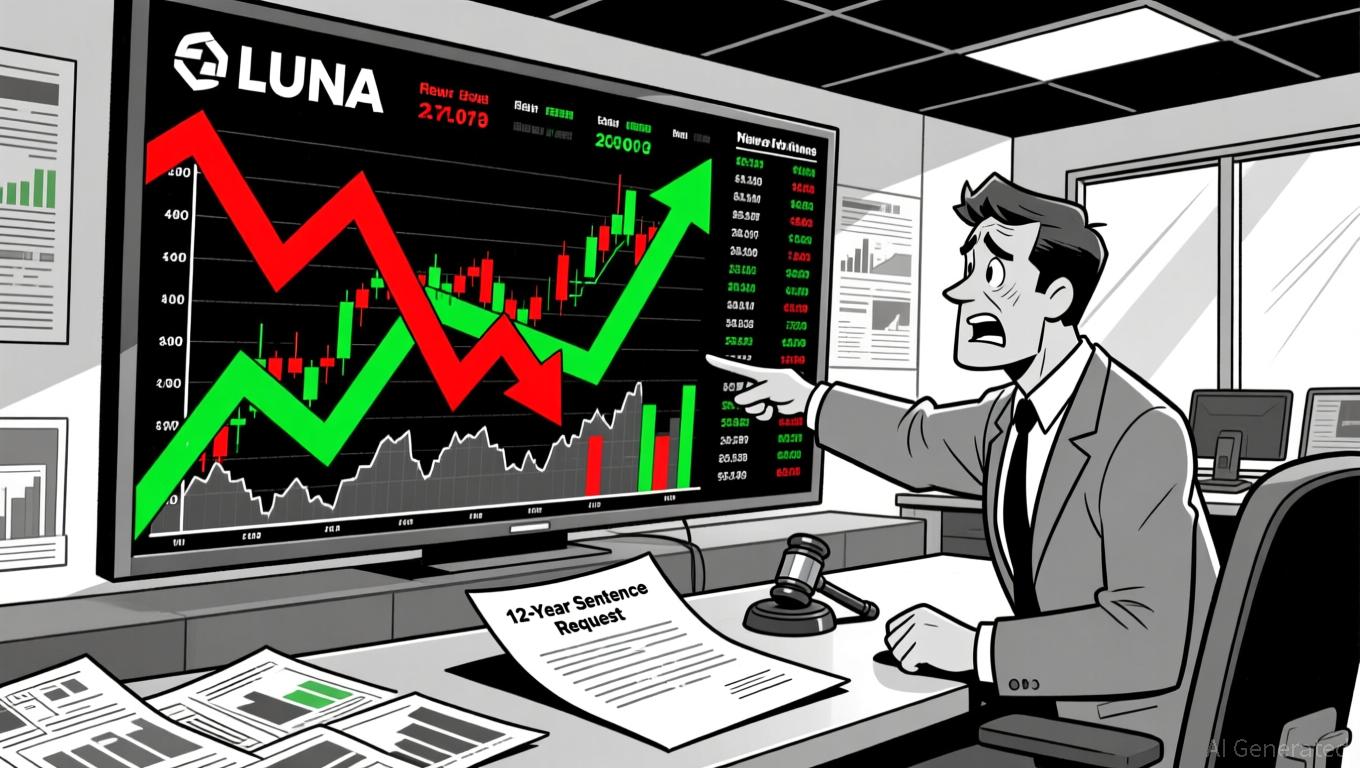
Luna Jumps 46.22% in a Week Following Legal Action Reports
- LUNA surged 5.67% in 24 hours, driven by prosecutors' 12-year prison request for Terra founder Do Kwon. - Kwon faces charges over TerraUSD's collapse, which erased $40B, with prosecutors calling his actions "colossal in scope." - Market reacted strongly: Luna Classic jumped 130% while LUNA rose 70% amid renewed Terra ecosystem interest. - Sentencing on Dec 11 could reshape Terra's future, with legal outcomes potentially influencing crypto regulatory frameworks. - Investors warned of persistent volatility
AI Token Price Fluctuations and Investor Prudence: Insights from the ChainOpera Collapse and Strategies for Building Resilience
- ChainOpera AI's 2025 collapse exposed systemic risks in centralized crypto projects with opaque AI models and governance. - The token lost 90% of value due to liquidity imbalances, unaudited algorithms, and regulatory uncertainty under the U.S. CLARITY Act. - Post-crash lessons emphasize transparent governance, real-world utility, and compliance with frameworks like NIST AI RMF and ISO/IEC 42001. - Projects like ASI and Ocean Protocol demonstrate resilience through decentralized models, auditable systems
Trending news
MoreCrypto prices
More





