
Asset Tokenization Infrastructure Innovation: Strategic Investment in Secure Blockchain Platforms for Financial Institutions
- Financial institutions are tokenizing real-world assets via blockchain, driving a $24B market in 2025 with J.P. Morgan and BlackRock leading adoption. - Platforms like Onyx Digital Assets and BUIDL fund demonstrate blockchain's ability to reduce settlement times and scale tokenized securities. - Strategic frameworks prioritize hybrid blockchain models, smart contract compliance (e.g., ERC-1400), and alignment with U.S. GENIUS Act and EU MiCAR regulations. - Tokenization offers 4-10% yields but faces impl
The financial landscape is undergoing a seismic shift as institutions increasingly adopt blockchain technology to tokenize real-world assets (RWAs). This innovation, driven by secure blockchain platforms, is redefining liquidity, transparency, and operational efficiency in asset management. For financial institutions , strategic investment in these infrastructures is no longer speculative—it is a calculated imperative.
Market Momentum and Institutional Adoption
The asset tokenization market reached $24 billion in 2025, fueled by regulatory clarity and institutional experimentation [1]. J.P. Morgan’s Onyx Digital Assets platform, for instance, executed a blockchain-based collateral settlement with BlackRock and Barclays in late 2023, reducing settlement times from days to minutes [1]. Similarly, BlackRock’s BUIDL fund, the largest tokenized treasury fund, now holds over $2.9 billion in U.S. Treasuries, demonstrating the scalability of tokenized securities [2].
Financial institutions are also leveraging tokenization for real estate, commodities, and private credit. Signature Bank’s partnership with TrueUSD and HSBC’s Digital Vault on R3’s Corda platform highlight how blockchain is streamlining custody, audit trails, and cross-border transactions [2]. These initiatives are supported by custodians and regulated entities, ensuring compliance with KYC/AML protocols while integrating with traditional financial systems [1].
Strategic Frameworks for Secure Tokenization
To capitalize on this growth, institutions must adopt robust frameworks that balance innovation with compliance. Key considerations include:
Blockchain Platform Selection:
Financial institutions are choosing between public blockchains (e.g., Ethereum) for accessibility and innovation or permissioned blockchains (e.g., Corda) for privacy and regulatory alignment [2]. Hybrid models, such as Google Cloud’s Universal Ledger, are gaining traction, offering Python-based smart contracts and institutional-grade security [1].Smart Contract Integration:
Smart contracts automate compliance, dividend distributions, and transfer restrictions, reducing reliance on intermediaries. Platforms like Securitize and INX use Ethereum’s ERC-1400 standard to create compliant security tokens, supported by U.S. and EU regulatory frameworks [5].Regulatory Alignment:
The U.S. GENIUS Act and EU’s MiCAR are critical in providing clarity for tokenized assets. The SEC’s affirmation that tokenized securities remain subject to existing securities laws underscores the need for rigorous compliance [3]. Institutions must also navigate evolving frameworks like the CLARITY Act, which clarifies regulatory responsibilities between the SEC and CFTC [4].Interoperability and Liquidity:
Tokenized assets must be compatible with DeFi platforms and secondary markets to ensure liquidity. For example, tokenized real estate or corporate bonds can be fractionalized and traded 24/7, lowering barriers for retail investors [5]. Platforms are also integrating real-time analytics and cross-chain protocols to enhance functionality [1].
ROI and Risk Mitigation
Tokenization offers compelling returns. U.S. Treasury tokens yield 4-5%, while private credit tokens offer 8-10%, attracting both institutional and retail investors [1]. However, early adopters face high implementation costs and regulatory complexity. Institutions must weigh these risks against long-term benefits like reduced operational friction and enhanced transparency [5].
Future Outlook and Recommendations
With the blockchain infrastructure market projected to grow at a 90.1% CAGR to $1.43 trillion by 2030 [1], financial institutions must act decisively. Strategic recommendations include:
- Pilot Programs: Start with tokenized fund units or compliance reporting to build expertise.
- Partnerships: Collaborate with cloud providers and DeFi platforms to enhance scalability.
- Regulatory Engagement: Advocate for frameworks that balance innovation with investor protection.
In conclusion, asset tokenization is not merely a technological advancement but a strategic reimagining of financial infrastructure. Institutions that embrace secure blockchain platforms today will lead the next era of financial innovation.
Source:
[1] The Future of Collateral Management in Cleared Derivatives
[2] Real-World Asset Tokenization Hits $24 Billion As Wall Street Bets Big
[3] Update on the U.S. Digital Assets Regulatory Framework
[4] Strategic Investment in U.S. Government Data Infrastructure
[5] Tokenization of Real-World Assets
Disclaimer: The content of this article solely reflects the author's opinion and does not represent the platform in any capacity. This article is not intended to serve as a reference for making investment decisions.
You may also like
Who decides the fate of 210 billions euros in frozen Russian assets? German Chancellor urgently flies to Brussels to lobby Belgium
In order to push forward the plan of using frozen Russian assets to aid Ukraine, the German Chancellor even postponed his visit to Norway and rushed to Brussels to have a working meal with the Belgian Prime Minister, all in an effort to remove the biggest "obstacle."
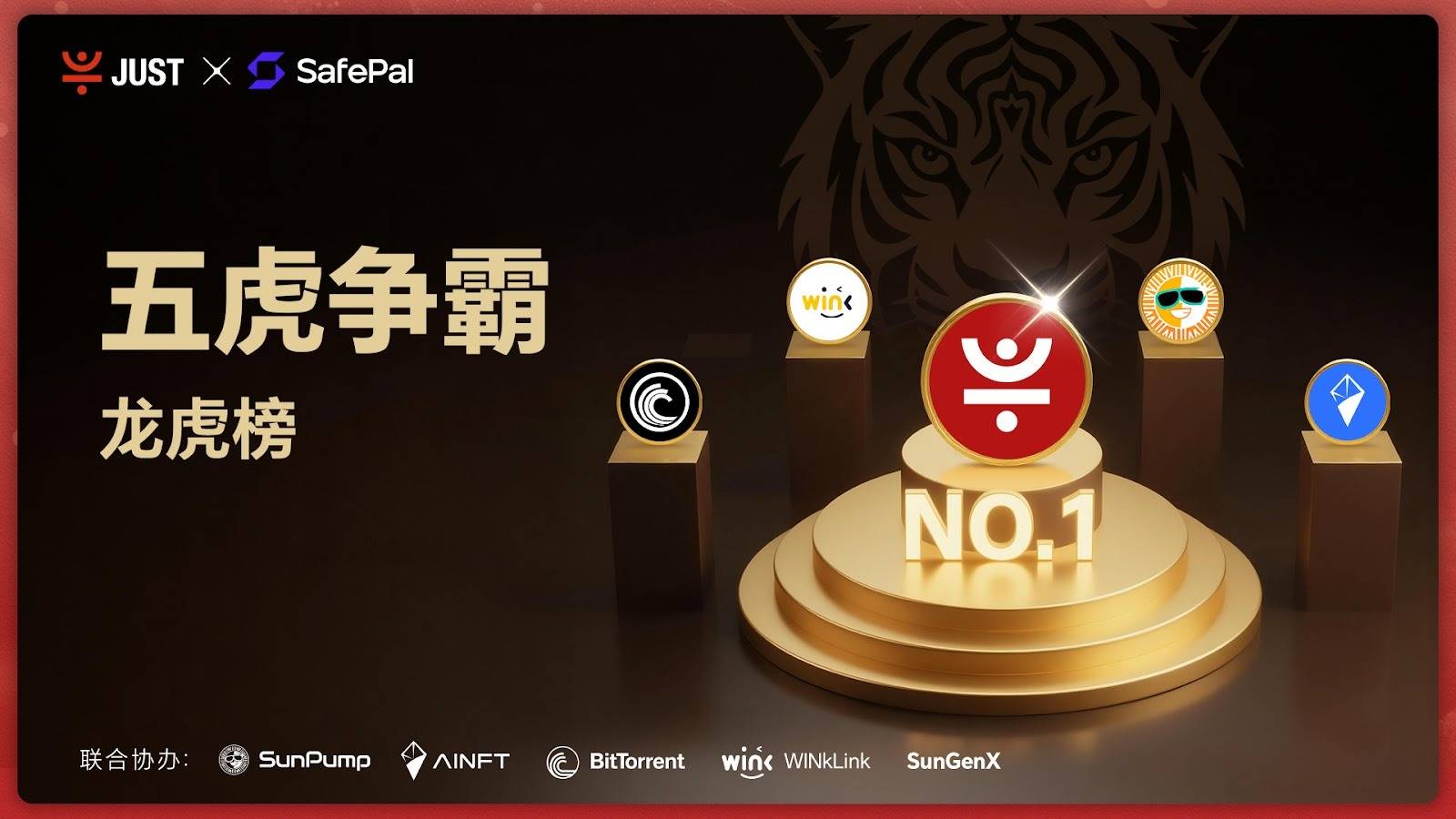
The "Five Tigers Competition" concludes successfully | JST, SUN, and NFT emerge as champions! SUN.io takes over as the new driving force in the ecosystem
JST, SUN, and NFT are leading the way, sparking increased trading and community activity, which is driving significant capital inflows into the ecosystem. Ultimately, the one-stop platform SUN.io is capturing and converting these flows into long-term growth momentum.
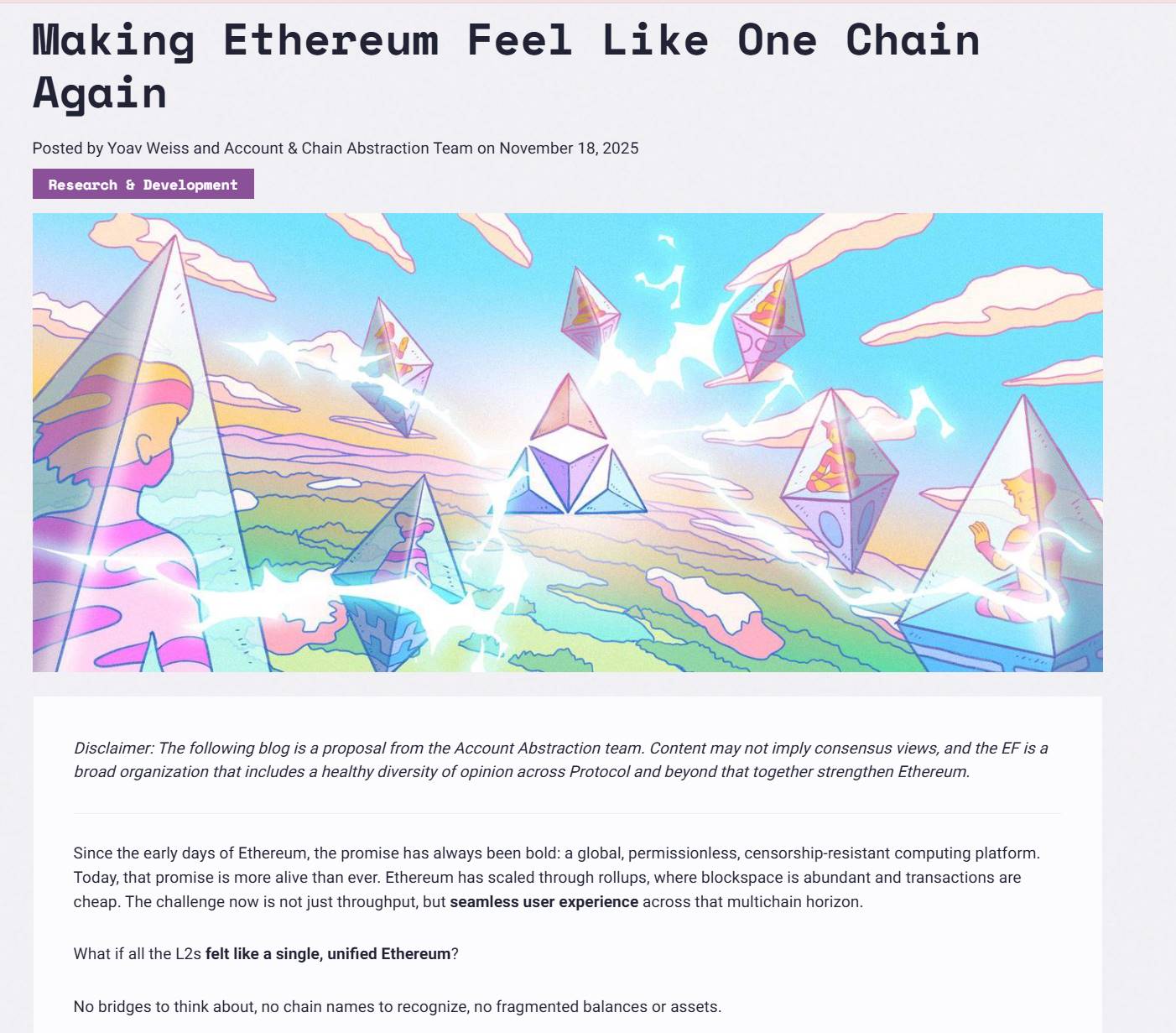
The End of Ethereum's Isolation: How EIL Reconstructs Fragmented L2s into a "Supercomputer"?
EIL is the latest answer provided by the Ethereum account abstraction team and is also the core of the "acceleration" phase in the interoperability roadmap.
Trending news
MoreCrypto prices
More





