
Hong Kong's Stablecoin Licensing Regime: A Strategic Opportunity for Digital Asset Innovation
- Hong Kong's Stablecoins Ordinance (Cap. 656), effective August 1, 2025, establishes a strict licensing framework for fiat-referenced stablecoins under HKMA oversight. - Requirements include HK$25 million minimum capital and 100% reserve asset backing, aiming to eliminate volatility while attracting institutional investors seeking regulated digital assets. - Early-licensed issuers gain market dominance through cross-border payment and DeFi innovations, with limited licenses expected by early 2026 creating
Hong Kong's newly implemented Stablecoins Ordinance (Cap. 656), effective August 1, 2025, marks a pivotal moment in the global digital asset landscape. By establishing a rigorous licensing framework for fiat-referenced stablecoins (FRS), the Hong Kong Monetary Authority (HKMA) has created a regulatory environment that balances innovation with investor protection. For investors and entrepreneurs, this regime offers a unique opportunity to capitalize on regulatory clarity and early-mover advantages in a market poised for growth.
Regulatory Clarity: A Magnet for Institutional Capital
The HKMA's licensing requirements—ranging from HK$25 million in paid-up share capital to 100% reserve asset backing—are among the most stringent in the world. While these thresholds may seem daunting, they serve a critical purpose: to eliminate the volatility and opacity that have plagued earlier stablecoin experiments. By mandating transparency in reserve management and daily redemption rights, the regime ensures that stablecoins function as reliable mediums of exchange.
For investors, this clarity reduces systemic risk. Unlike the unregulated stablecoin markets of 2020–2024, where collapses like TerraUSD eroded trust, Hong Kong's framework provides institutional-grade safeguards. This is particularly appealing to global asset managers and hedge funds seeking to allocate capital to digital assets without exposing themselves to the tail risks of unbacked tokens.
Early-Mover Advantages: Securing a License in a Competitive Landscape
The HKMA's licensing process is designed to be selective. With a limited number of licenses expected to be granted in early 2026, entities that secure approval will dominate the market for years to come. The transitional period (until January 31, 2026) for pre-existing issuers further amplifies this dynamic, creating a window for new entrants to establish themselves without competing with legacy players.
For startups and fintech firms, this is a golden opportunity. The HKMA's emphasis on innovative use cases—such as cross-border payments, tokenized assets, and decentralized finance (DeFi) integration—means that applicants with scalable, real-world applications will be prioritized. For example, a stablecoin issuer leveraging tokenized government securities as reserve assets could gain a competitive edge by aligning with Hong Kong's broader digital asset strategy.
Strategic Investment Opportunities
- Infrastructure Providers: Firms offering blockchain custody solutions, AML compliance tools, or smart contract auditing services stand to benefit from the surge in licensed stablecoin activity.
- Licensed Issuers: Early-licensed entities will enjoy first-mover dominance, particularly if they partner with Hong Kong's SFC-licensed virtual asset trading platforms for distribution.
- Cross-Border Play: Hong Kong's regime is designed to attract international stablecoin projects seeking a regulated base. Investors should monitor partnerships between HKMA licensees and global fintech giants.
Risks and Mitigations
While the regime is robust, challenges remain. The high capital and operational barriers may limit competition, potentially stifling innovation. Additionally, the HKMA's broad supervisory powers—including the ability to revoke licenses—introduce regulatory uncertainty. However, these risks are mitigated by the regime's alignment with international best practices and its focus on systemic stability.
For investors, the key is to prioritize projects with strong governance and diverse reserve asset portfolios. Entities that overcollateralize their reserves or integrate tokenized representations of government bonds (as permitted under the Ordinance) will be better positioned to weather market stress.
Conclusion: A New Era for Digital Assets
Hong Kong's stablecoin licensing regime is more than a regulatory framework—it is a blueprint for sustainable digital finance. By creating a sandbox where innovation thrives under strict oversight, the HKMA has positioned Hong Kong as a global hub for stablecoin innovation. For investors, the message is clear: act now to secure exposure to this ecosystem before it reaches critical mass.
As the first batch of licenses is awarded in early 2026, the winners will be those who leverage regulatory clarity to build trust, scale efficiently, and capture market share in a space that is expected to grow exponentially. The future of stablecoins is not just in Silicon Valley or Wall Street—it's in Hong Kong.
Disclaimer: The content of this article solely reflects the author's opinion and does not represent the platform in any capacity. This article is not intended to serve as a reference for making investment decisions.
You may also like
Five charts to help you understand: Where does the market go after each policy storm?
After this regulatory crackdown, is it a harbinger of an impending downturn, or the beginning of a new cycle where all negative news has been fully priced in? Let’s examine the trajectory after the storm through five key policy milestones.
Mars Morning News | The crypto market rebounds across the board, Bitcoin rises above $94,500; The "CLARITY Act" draft is expected to be released this week
The crypto market has fully rebounded, with bitcoin surpassing $94,500 and US crypto-related stocks rising across the board. The US Congress is advancing the CLARITY Act to regulate cryptocurrencies. The SEC chairman stated that many ICOs are not securities transactions. Whales are holding a large number of profitable ETH long positions. Summary generated by Mars AI. The accuracy and completeness of the content generated by the Mars AI model is still being iteratively updated.

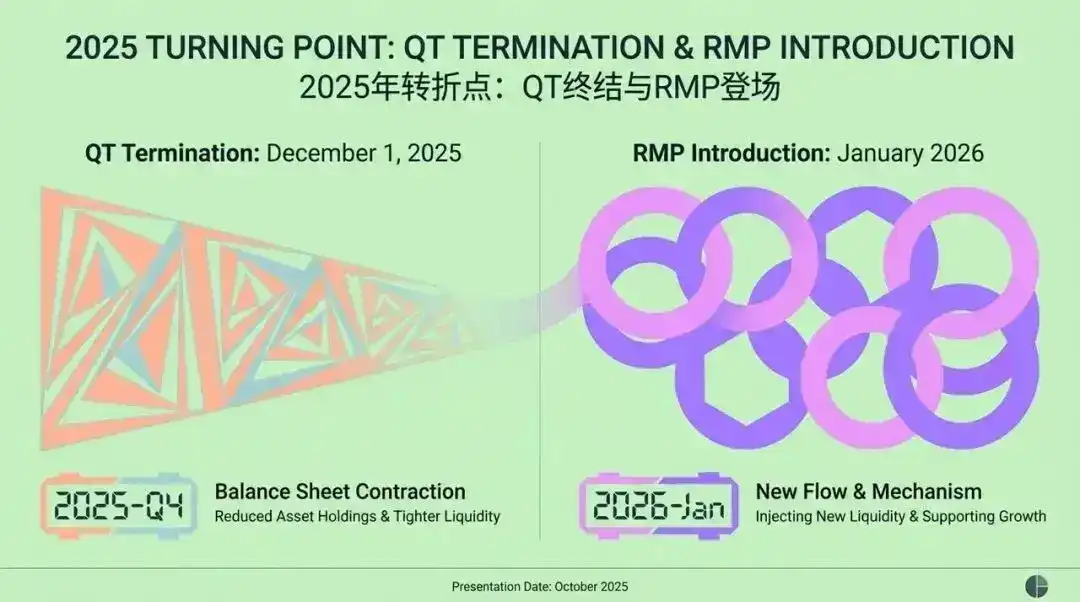
Federal Reserve’s Major Shift: From QT to RMP, How Will the Market Transform by 2026?
The article discusses the background, mechanism, and impact on financial markets of the Federal Reserve's introduction of the Reserve Management Purchases (RMP) strategy after ending Quantitative Tightening (QT) in 2025. RMP is regarded as a technical operation aimed at maintaining liquidity in the financial system, but the market interprets it as a covert easing policy. The article analyzes RMP's potential effects on risk assets, the regulatory framework, and fiscal policy, and provides strategic recommendations for institutional investors. Summary generated by Mars AI This summary was generated by the Mars AI model, and the accuracy and completeness of its content are still in the process of iterative improvement.
Rate Hike in Japan: Will Bitcoin Resist Better Than Expected?
Trending news
MoreCrypto prices
More





