
Google Increases Stake in TeraWulf, Accelerating AI Data Center Expansion with Fluidstack

Google has become the largest shareholder in TeraWulf Inc., owning a 14% equity stake after increasing its financial backstop to $3.2 billion.
Google has become the largest shareholder in TeraWulf Inc., owning a 14% equity stake after increasing its financial backstop to $3.2 billion.
This move coincides with a significant expansion of TeraWulf’s Lake Mariner data center in Western New York, transforming it into a major AI infrastructure hub through a partnership with Fluidstack, a leading AI cloud provider.
Key Highlights
✔️ Total contracted capacity increases to >360 MW of Critical IT Load with the addition of CB-5
✔️ The CB-5 lease is on the same economic terms as the initial @fluidstackio leases for CB-3 and CB-4
✔️ Represents $6.7 billion in contracted revenue (with potential…— TeraWulf (@TeraWulfInc) August 18, 2025
TeraWulf disclosed the new shareholdings during a recent shareholder call, revealing the $3.2 billion backstop supports lease obligations in a 10-year colocation agreement with Fluidstack. Fluidstack has exercised its option to expand the Lake Mariner campus with a new 160 MW purpose-built data center, bringing total contracted capacity to over 360 MW, which positions the facility as one of North America’s largest and most advanced AI data centers. Operations for the new data center are expected to commence in the second half of 2026.
Google’s increased financial commitment not only provides a robust guarantee for project-related debt financing but also grants it warrants to acquire additional shares. This strategic investment underscores Google’s endorsement of TeraWulf’s predominantly zero-carbon, liquid-cooled infrastructure designed specifically for high-density AI workloads.
The collaboration signifies accelerating demand for specialized AI computing capacity, with TeraWulf securing approximately $6.7 billion in contracted revenues from Fluidstack leases, potentially rising to $16 billion with extension options. With Google as a top investor and Fluidstack as a key client, TeraWulf is poised to capitalize on rapid growth in hyperscale AI infrastructure, setting new standards for sustainable and scalable data center operations.
TeraWulf CEO Paul Prager stated the deal showcases the company’s commitment to delivering next-generation AI infrastructure powered by clean energy, further legitimizing Lake Mariner’s status as a premier hyperscale-ready campus.
This development highlights rising corporate investment in green digital infrastructure to support burgeoning AI workloads, reflecting a broader industry trend toward sustainable technology investments.
Notably, Google Play is tightening oversight on cryptocurrency wallet providers, with a new policy requiring licensing and compliance with “industry standards” in more than 15 jurisdictions — including the United States and European Union.
Disclaimer: The content of this article solely reflects the author's opinion and does not represent the platform in any capacity. This article is not intended to serve as a reference for making investment decisions.
You may also like
Mars Morning News | The crypto market rebounds across the board, Bitcoin rises above $94,500; The "CLARITY Act" draft is expected to be released this week
The crypto market has fully rebounded, with bitcoin surpassing $94,500 and US crypto-related stocks rising across the board. The US Congress is advancing the CLARITY Act to regulate cryptocurrencies. The SEC chairman stated that many ICOs are not securities transactions. Whales are holding a large number of profitable ETH long positions. Summary generated by Mars AI. The accuracy and completeness of the content generated by the Mars AI model is still being iteratively updated.

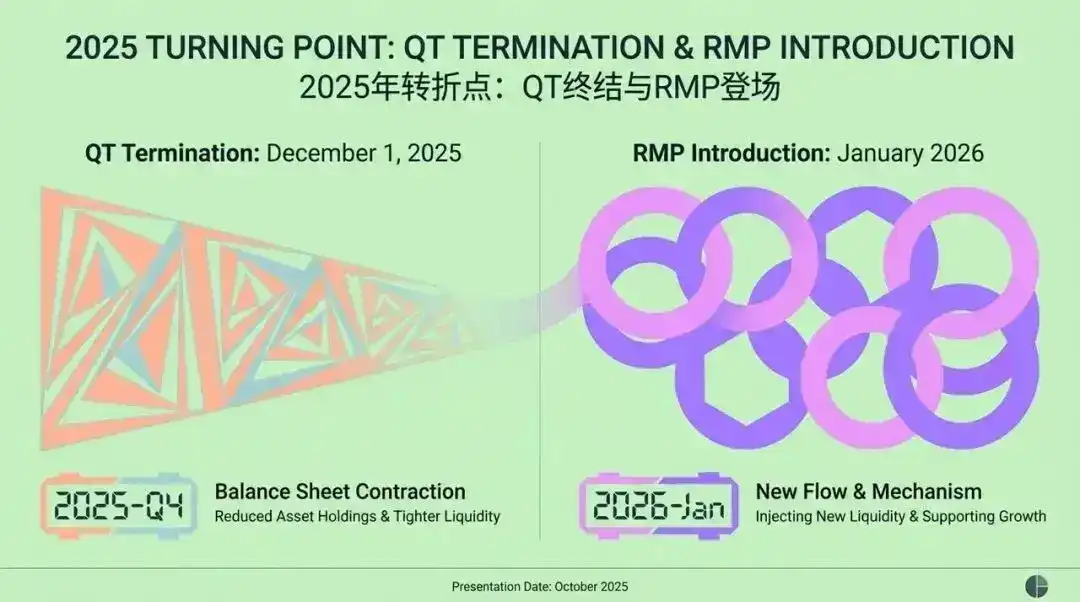
Federal Reserve’s Major Shift: From QT to RMP, How Will the Market Transform by 2026?
The article discusses the background, mechanism, and impact on financial markets of the Federal Reserve's introduction of the Reserve Management Purchases (RMP) strategy after ending Quantitative Tightening (QT) in 2025. RMP is regarded as a technical operation aimed at maintaining liquidity in the financial system, but the market interprets it as a covert easing policy. The article analyzes RMP's potential effects on risk assets, the regulatory framework, and fiscal policy, and provides strategic recommendations for institutional investors. Summary generated by Mars AI This summary was generated by the Mars AI model, and the accuracy and completeness of its content are still in the process of iterative improvement.
Rate Hike in Japan: Will Bitcoin Resist Better Than Expected?

Crucial Decision: Trump’s Final Interviews for Federal Reserve Chair Could Reshape Markets
Trending news
MoreCrypto prices
More





