
Hong Kong freezes stablecoin licensing through 2025 as rules take effect

Hong Kong’s decision to hold off on stablecoin licensing until 2025, as the regulatory regime prepares for Gazette publication on August 1, signals caution over rapid adoption. But is this a strategic pause or a bottleneck for crypto’s next frontier?
- Hong Kong will not issue stablecoin licenses in 2025, despite finalizing a regulatory framework effective August 1.
- The HKMA’s guidelines focus on reserve transparency, AML compliance, and capital requirements, with early applications due September 30.
- The delay reflects Hong Kong’s cautious, phased approach to crypto regulation, starkly contrasting with the U.S. GENIUS Act’s rapid rollout.
On July 29, the Hong Kong Monetary Authority confirmed it will not issue any stablecoin licenses this year, despite finalizing a comprehensive regulatory framework that takes effect on August 1.
The guidelines impose strict requirements on issuers, including anti-money laundering controls and reserve transparency. Deputy CEO Darryl Chan Wai-man cited the “heavy workload” of vetting applications, with approvals unlikely before early 2025, and even then, it might be only for a select few.
Hong Kong chooses rigor over speed in stablecoin blueprint
While Hong Kong’s stablecoin licensing pause stretches into 2025, the newly finalized rules reveal a regulatory framework designed for precision. The HKMA’s July 29 release outlines two core guidelines: one dictating capital and operational requirements for licensed issuers, and another enforcing stringent anti-money laundering protocols, while clarifying how existing issuers will be transitioned into the new regime.
After taking effect next month, violators risk penalties under Hong Kong’s Stablecoins Ordinance. Meanwhile, prospective applicants face a tight timeline, with the regulator urging them to signal intent by August 31 for preliminary feedback, with full submissions due by September 30 for early consideration.
Though licensing remains “ongoing,” the HKMA’s phased approach suggests a bottleneck: only the most compliant candidates will clear initial scrutiny. Deputy CEO Darryl Chan’s warning, that explosive growth is unlikely, hints at a deliberate throttling of market entry.
The U.S. contrast
Hong Kong’s measured rollout clashes starkly with Washington’s aggressive stablecoin strategy. Signed by President Trump on July 18, the GENIUS Act mandates 100% reserve backing for stablecoins, monthly transparency reports, and federal AML oversight, all while fast-tracking approvals. Where Hong Kong prioritizes deliberation, the U.S. framework thrives on speed, explicitly aiming to “move LIGHTNING FAST” (as Trump tweeted) to dominate digital asset innovation.
The divergence reflects deeper priorities: Hong Kong seeks stability through selective licensing, while America bets on scale and dollar hegemony. Yet both regimes share a focus on consumer safeguards. Hong Kong’s rules prohibit misleading claims about licensing status, mirroring the GENIUS Act’s crackdown on deceptive marketing.
Disclaimer: The content of this article solely reflects the author's opinion and does not represent the platform in any capacity. This article is not intended to serve as a reference for making investment decisions.
You may also like
Who decides the fate of 210 billions euros in frozen Russian assets? German Chancellor urgently flies to Brussels to lobby Belgium
In order to push forward the plan of using frozen Russian assets to aid Ukraine, the German Chancellor even postponed his visit to Norway and rushed to Brussels to have a working meal with the Belgian Prime Minister, all in an effort to remove the biggest "obstacle."
The "Five Tigers Competition" concludes successfully | JST, SUN, and NFT emerge as champions! SUN.io takes over as the new driving force in the ecosystem
JST, SUN, and NFT are leading the way, sparking increased trading and community activity, which is driving significant capital inflows into the ecosystem. Ultimately, the one-stop platform SUN.io is capturing and converting these flows into long-term growth momentum.
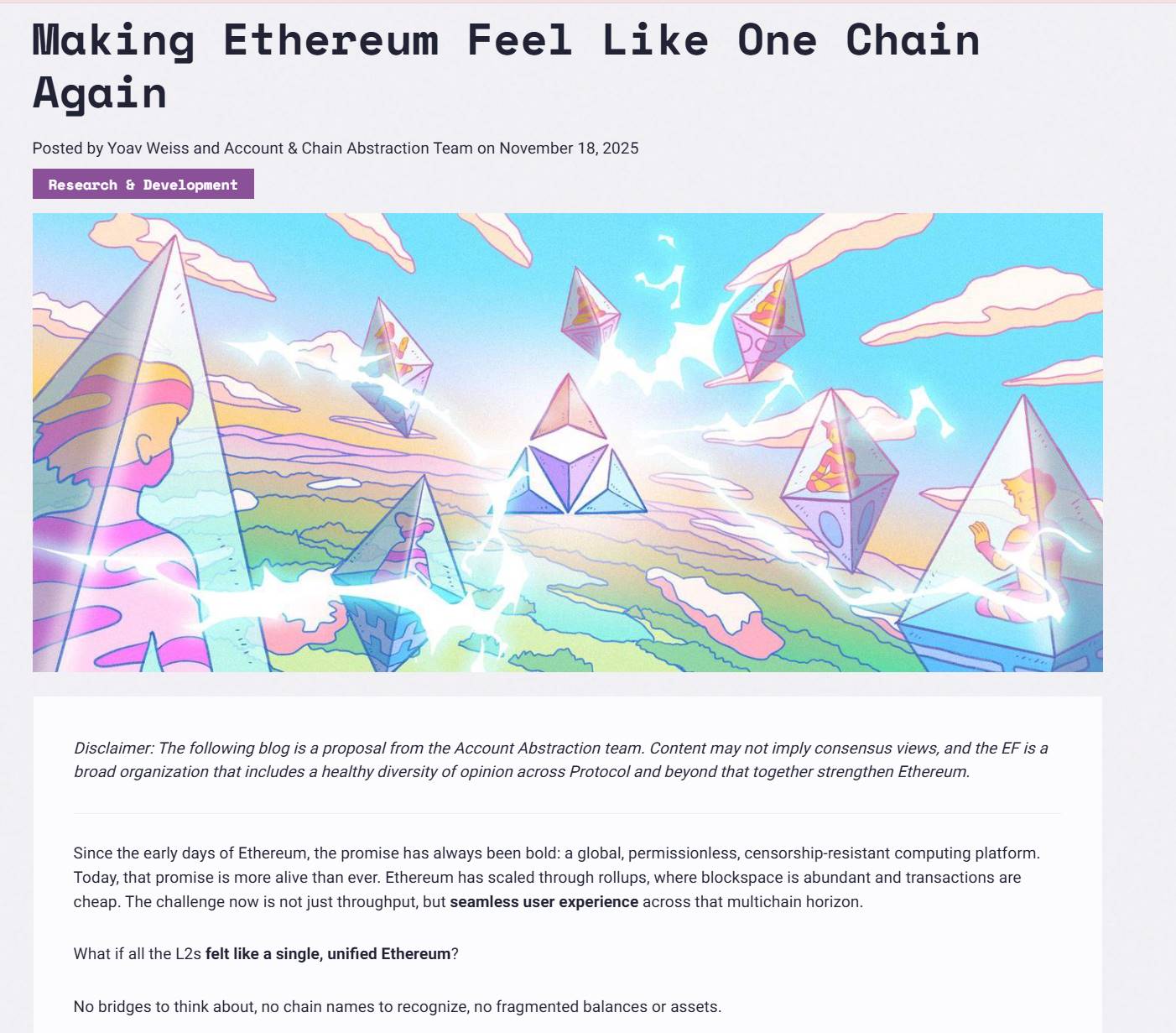
The End of Ethereum's Isolation: How EIL Reconstructs Fragmented L2s into a "Supercomputer"?
EIL is the latest answer provided by the Ethereum account abstraction team and is also the core of the "acceleration" phase in the interoperability roadmap.
Trending news
MoreCrypto prices
More





