
Research Report | In-Depth Overview of SOPHON & $SOPH Valuation Analysis
I. Project Overview

II. Project Highlights
-
Clear Positioning: Focused on Consumer-Grade Web3 Scenarios Unlike general-purpose Layer 2s, Sophon targets consumer scenarios such as gaming, social, entertainment, and ticketing—areas characterized by high-frequency, lightweight interactions. This makes it more relatable and goal-driven compared to other ZK-based projects.
-
Validium Architecture: Optimized for Performance & Cost By using Validium and offloading data availability (currently via Avail), Sophon drastically cuts transaction costs while maintaining security—ideal for micropayment-heavy scenarios like gaming and ticketing.
-
AA + Paymaster: Lowering User Onboarding Friction With support for Account Abstraction and Paymaster, users can interact with blockchain services via email or Google login and pay gas with ERC20 tokens or even for free. This bridges the UX gap between Web2 and Web3, enhancing accessibility for non-crypto users.
-
zkTLS: Verifiable Web2 Data On-Chain Through zkTLS integration, Sophon enables verifiable on-chain proof of Web2 account data—such as Spotify and Steam—without revealing underlying credentials. This innovation lays the groundwork for data assetization and Web2-Web3 convergence.
-
Community-Centric Token Distribution & Node Incentives Over 50% of the $SOPH token supply is allocated for community incentives including node rewards, airdrops, and liquidity. The $60M raised from node sales reflects strong grassroots traction. Team and investor tokens are subject to long lockups and gradual release, ensuring responsible token management.
III. Valuation Outlook

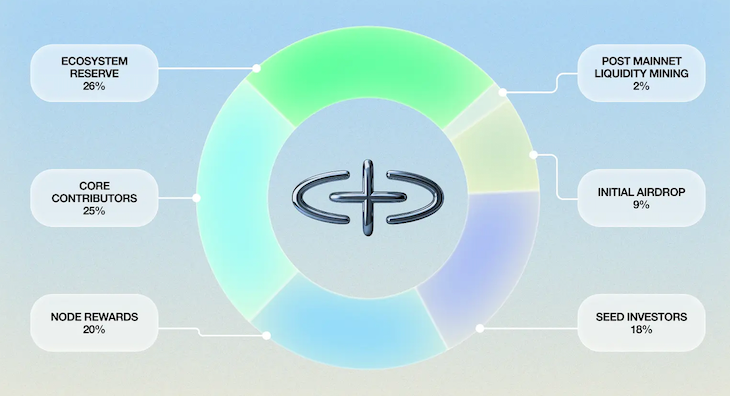
IV. Tokenomics
-
Node Rewards – 20% Incentivizes early node participants. 3-month lock post-TGE, followed by weekly linear vesting. Nodes can upgrade from Light to Full Node post-sequencer decentralization and participate in sorting.
-
Seed Investors – 18% Allocated to early institutional backers. 12-month cliff, then 24-month linear vesting.
-
Core Contributors – 25% Allocated to key tech and product team members. 12-month cliff, followed by 36-month linear vesting.
-
Ecosystem Reserve – 26% 42% unlocked at TGE; remaining distributed linearly over 5 years. Used for ecosystem incentives, CEX liquidity, strategic partnerships, and long-term growth.
-
Pre-Mainnet Liquidity Mining Airdrop – 6% Distributed to L1 farm users, fully unlocked at TGE.
-
Bonus Airdrop – 3% For early community members, ZKsync users, node holders, NFT holders, etc., fully unlocked at TGE.
-
Post-Mainnet Liquidity Mining – 2% 6-month cliff, then linear release over 6 months to support early mainnet liquidity programs.
-
Governance $SOPH will function as a governance token for ecosystem proposals including reward allocation, node sorting, staking rules, and ecosystem funding.
-
Utility & Staking Used for gas payments and node staking. After ZKsync decentralizes its sequencer, Full Node operators must stake 100,000 $SOPH to qualify. Delegated staking will allow users to earn a share of node rewards.
V. Team & Funding
-
Sebastien (Co-Founder & CEO): Former Web3 Lead at Matter Labs
-
Tom Bean (CTO): Former Engineer at Nokia
-
Ed Chang (COO): Former Head of Gaming at Ava Labs
-
Oskari Tempakka (CMO): Former Venture Capital Partner
-
Ramon Canales (VP of Product): Former Product Delivery Lead at Matter Labs
-
October 2024: Strategic investment from YZi Labs (amount undisclosed)
-
March 2025: $10M seed round led by Maven11 and Paper Ventures. Other backers include OKX Ventures, HTX Ventures, The Spartan Group, and SevenX Ventures.
VI. Risk Factors
-
Limited DApp Adoption: Currently, the majority of Sophon's activity centers around node operations and airdrops. Real-world usage and active daily users are still minimal. Features like zkTLS and social data bridges hold promise, but developer adoption and application deployment are still in early stages.
-
Dependency on ZKsync Roadmap: As a component of the Elastic Chain, Sophon’s progress in areas such as sequencer decentralization, cross-chain interoperability, and infrastructure upgrades is tightly coupled with ZKsync’s roadmap. Delays or setbacks from ZKsync could impact Sophon’s momentum.
VII. Official Links
-
Website: https://sophon.xyz/
-
Twitter: https://x.com/sophon
-
Telegram: https://t.me/sophonhub
Disclaimer: The content of this article solely reflects the author's opinion and does not represent the platform in any capacity. This article is not intended to serve as a reference for making investment decisions.
You may also like
Research Report|In-Depth Analysis and Market Cap of Talus (US)
Five charts to help you understand: Where does the market go after each policy storm?
After this regulatory crackdown, is it a harbinger of an impending downturn, or the beginning of a new cycle where all negative news has been fully priced in? Let’s examine the trajectory after the storm through five key policy milestones.

Mars Morning News | The crypto market rebounds across the board, Bitcoin rises above $94,500; The "CLARITY Act" draft is expected to be released this week
The crypto market has fully rebounded, with bitcoin surpassing $94,500 and US crypto-related stocks rising across the board. The US Congress is advancing the CLARITY Act to regulate cryptocurrencies. The SEC chairman stated that many ICOs are not securities transactions. Whales are holding a large number of profitable ETH long positions. Summary generated by Mars AI. The accuracy and completeness of the content generated by the Mars AI model is still being iteratively updated.

Federal Reserve’s Major Shift: From QT to RMP, How Will the Market Transform by 2026?
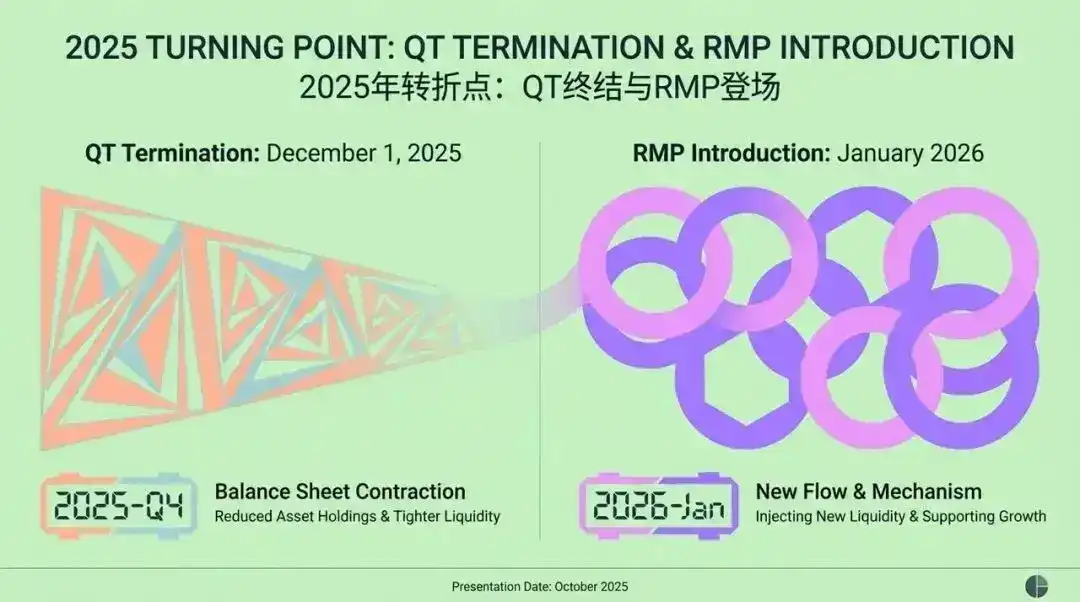
The article discusses the background, mechanism, and impact on financial markets of the Federal Reserve's introduction of the Reserve Management Purchases (RMP) strategy after ending Quantitative Tightening (QT) in 2025. RMP is regarded as a technical operation aimed at maintaining liquidity in the financial system, but the market interprets it as a covert easing policy. The article analyzes RMP's potential effects on risk assets, the regulatory framework, and fiscal policy, and provides strategic recommendations for institutional investors. Summary generated by Mars AI This summary was generated by the Mars AI model, and the accuracy and completeness of its content are still in the process of iterative improvement.
Trending news
MoreCrypto prices
More





