Last updated:
December 12, 2024 00:02 EST

Thomas Peterffy admitted fear of cryptocurrencies, citing their volatility and describing them as "a figment of imagination."

Interactive Brokers Chair Thomas Peterffy has said everyone should own Bitcoin, but in moderation. He advised investors to allocate between 2% to 3% of their net worth to Bitcoin. However, he cautioned against exceeding 10%, warning that doing so “would be very dangerous.”
In a Bloomberg podcast published on Thursday, Peterffy admitted that he’s “scared” of cryptocurrencies due to their volatility. Furthermore, he described them as “basically just a figment of imagination.”
“So it doesn’t have any underlying volume. The only value it has is the same as the paper dollar, which is nothing,” he said.
Bitcoin has soared since Donald Trump’s election victory, driven by hopes for a more lenient cryptocurrency regulatory environment. It last traded around $100,959, up nearly 15% in a month.
Thomas Peterffy voiced concerns about the risks of overleveraging as margin balances grow rapidly. He warned that a sharp Bitcoin drop could cause widespread bankruptcies, burdening clearinghouses with the fallout.
Interactive Brokers began offering Bitcoin futures trading on the CBOE Futures Exchange in late 2017, and shortly after announced plans to include the Chicago Mercantile Exchange.
By Sept. 2021, Interactive Brokers expanded into crypto trading through a partnership with Paxos Trust Company, enabling US clients to trade and hold Bitcoin, Ethereum, Litecoin and Bitcoin Cash.
Thomas Peterffy’s recommendation for crypto portfolio allocation aligns with advice from other prominent figures. In October, renowned investor Bill Miller predicted that within three to five years, financial advisors would start suggesting a 1% to 3% allocation to Bitcoin in investment portfolios.
Miller pointed to Bitcoin’s unique economic characteristics, saying it’s the only economic entity where the supply is unaffected by the demand or the price. He further explained that belief in Bitcoin’s future only requires the conviction that its demand will outpace its supply.
Moreover, Miller highlighted Bitcoin’s resilience, noting that unlike traditional financial systems which needed central bank interventions during crises, Bitcoin has never required a bailout to maintain its functionality.
Disclaimer: The content of this article solely reflects the author's opinion and does not represent the platform in any capacity. This article is not intended to serve as a reference for making investment decisions.
Five charts to help you understand: Where does the market go after each policy storm?
After this regulatory crackdown, is it a harbinger of an impending downturn, or the beginning of a new cycle where all negative news has been fully priced in? Let’s examine the trajectory after the storm through five key policy milestones.

Mars Morning News | The crypto market rebounds across the board, Bitcoin rises above $94,500; The "CLARITY Act" draft is expected to be released this week
The crypto market has fully rebounded, with bitcoin surpassing $94,500 and US crypto-related stocks rising across the board. The US Congress is advancing the CLARITY Act to regulate cryptocurrencies. The SEC chairman stated that many ICOs are not securities transactions. Whales are holding a large number of profitable ETH long positions. Summary generated by Mars AI. The accuracy and completeness of the content generated by the Mars AI model is still being iteratively updated.

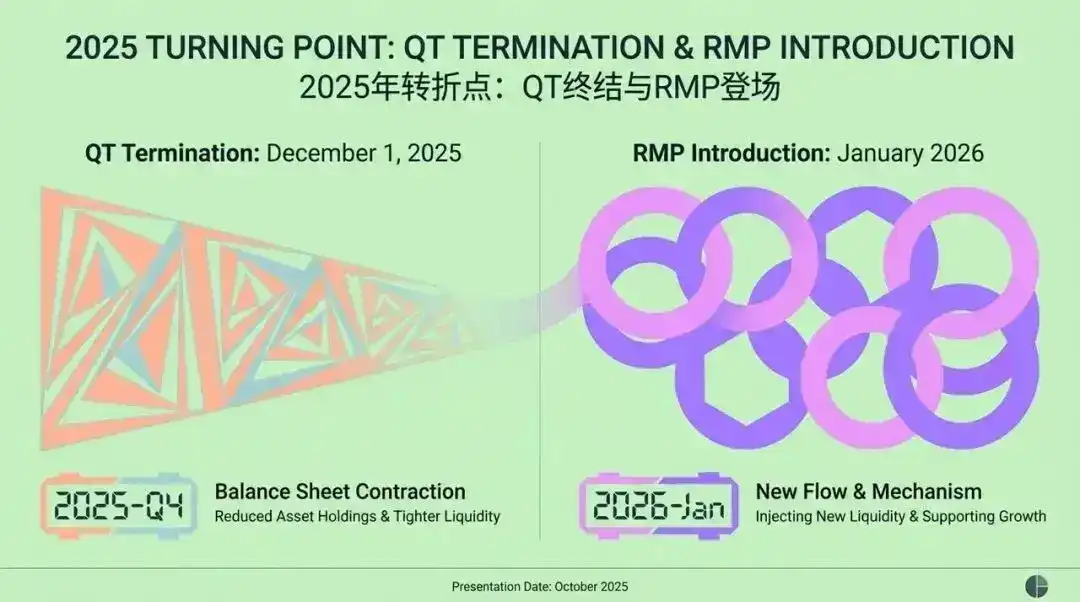
Federal Reserve’s Major Shift: From QT to RMP, How Will the Market Transform by 2026?
The article discusses the background, mechanism, and impact on financial markets of the Federal Reserve's introduction of the Reserve Management Purchases (RMP) strategy after ending Quantitative Tightening (QT) in 2025. RMP is regarded as a technical operation aimed at maintaining liquidity in the financial system, but the market interprets it as a covert easing policy. The article analyzes RMP's potential effects on risk assets, the regulatory framework, and fiscal policy, and provides strategic recommendations for institutional investors. Summary generated by Mars AI This summary was generated by the Mars AI model, and the accuracy and completeness of its content are still in the process of iterative improvement.
Rate Hike in Japan: Will Bitcoin Resist Better Than Expected?