
Ripple’s XRP Ruling a ‘Milestone Win’ for Crypto Industry, Says J.P. Morgan

The fight for regulatory clarity isn’t over yet, however, as the SEC will likely appeal the decision and continue to pursue similar cases in the future, analysts wrote.
The U.S. Southern District Court’s represents a milestone win for the crypto industry and provides legal clarity as to what does and doesn’t represent a security, banking giant J.P. Morgan wrote in a research note Friday.
“Large capital pools have been reticent to engage in the industry with unclear rules of the road, while the related overhang has also slowed innovation, adoption, and just overall crypto ecosystem valuation, in our opinion — accelerating as regulatory actions heated up over the past year,” analysts wrote.
“This ruling is undoubtedly a milestone win for the industry. It provides legal clarity and defense around what does and does not constitute a security, and that overall outcome is in favor of what many in the industry had been arguing,” they continued.
In a , a U.S. judge ruled that Ripple’s XRP token should not be considered a security if sold via an exchange or through programmatic sales.
, underpinning the importance this ruling has for the industry. Bitcoin () gained 3.6% on Thursday before retreating about 1.4% on Friday.
While Ripple’s win is certainly positive, J.P. Morgan also noted that this isn’t the end of the regulatory fight for the crypto industry, as the SEC can appeal the ruling and will also likely continue to pursue similar cases in the future.
“We do believe the industry has now established stronger ground for the time being which could affect ongoing cases, and also the pace of further litigation, but at a high level, we do not think the regulatory overhang simply disappears, it just lessens,” the note stated.
There are still many unanswered legal questions for the industry to operate to its full potential, the analysts continued, which is why it’s important to hear the tone and developments from lawmakers and regulators in Washington D.C.
Disclaimer: The content of this article solely reflects the author's opinion and does not represent the platform in any capacity. This article is not intended to serve as a reference for making investment decisions.
You may also like
Solana’s Latest Price Fluctuations and Institutional Involvement: Insights for Long-Term Investors
- Solana (SOL) faced 2025 price swings from $155 to $294, driven by macroeconomic pressures, on-chain weakness, and institutional adoption dynamics. - Institutional ETFs like Bitwise's BSOL attracted $2B AUM by mid-2025, with major holders staking SOL to deepen ecosystem integration despite short-term volatility. - Risks include network centralization, competition from Ethereum 2.0, and reliability concerns after the 2024 cluster outage amid Fed rate uncertainty. - Ecosystem resilience with 500+ dApps and
Timeless Strategies for Investing Amid Market Volatility
- In 2025, R.W. McNeel's 1927 value investing principles and Warren Buffett's strategies remain critical amid market volatility driven by tech disruption and geopolitical risks. - Both emphasize intrinsic value, emotional discipline, and long-term thinking to counter crypto and stock market swings fueled by speculation and social media hype. - Buffett's $340B cash reserves and focus on undervalued sectors like healthcare contrast with crypto's intangible promises, reinforcing tangible asset preferences. -

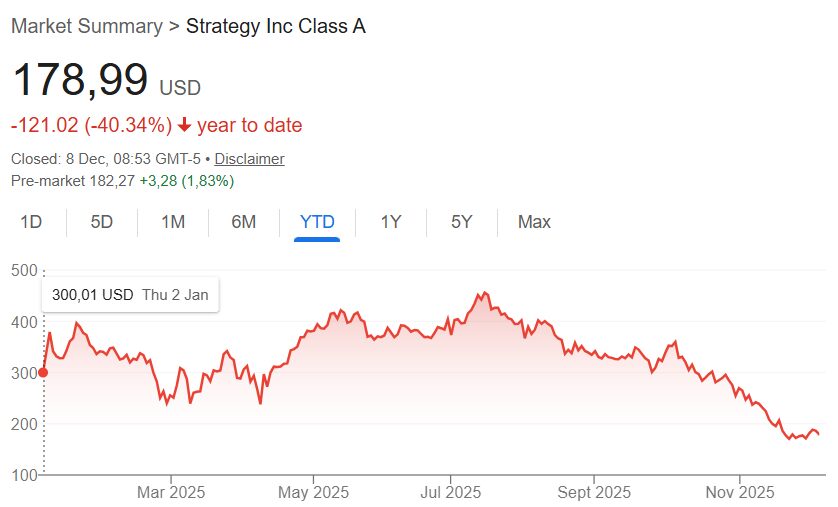
Saylor Strikes Again: Strategy Makes Its Biggest BTC Buy Since July
Bitcoin Experiences Sharp Decline: Underlying Reasons and Potential Impact for 2026
- Bitcoin fell 32% below $90,000 in 2025, raising bear market fears driven by Fed policy shifts, regulatory uncertainty, and institutional exits. - Fed's 0.25% rate cut and delayed inflation data created volatility, while the GENIUS Act's reserve rules may reduce Bitcoin's appeal unless rates drop further. - SEC's Project Crypto and Senate bills increased regulatory clarity risks, while $3.79B ETF outflows triggered self-reinforcing price declines. - 2026 outcomes depend on Fed clarity, regulatory resoluti
Trending news
MoreCrypto prices
More





